How Gynecomastia Took Over My Childhood and Killed My Self Esteem

17 years-old headed for homecoming. No date for a number of reasons, but having breasts was definitely one of them.

I was in the 6th grade when I noticed that I was finally starting puberty. After getting up early one morning to use the bathroom, I noticed that my package was starting to look a little bigger. Like any 12 year-old boy, I was excited to finally become a man. I spent the entire morning at school fantasizing about what changes would come next. A deeper voice? A growth spurt? Facial hair? Maybe even hair downstairs? While all of these things did eventually develop, one thing developed along with them that no one had prepared me for – breasts.

The first memory I have of crying in the mirror occurred about 3 months after noticing that my marbles were growing. While toweling off after a shower, I noticed that my previously puffy nipples had developed into breast buds. In disbelief, I reached for my chest to feel if there was anything really there. Tears filled my eyes and I began sobbing as I stared at myself in the mirror.

My mother heard me and opened the door to check if I was okay. She had to hold back laughing when she witnessed me standing in front of the mirror in my tighty whities, crying with nipples in my hands. She hugged me from behind and told me I was becoming a man. She praised me for being aware of my body and for being mature enough to be worried when I noticed something out of place, then explained that lots of boys (including my older brother) develop breasts during puberty. As I zipped up my pants, she told me it was called ‘gynecomastia’ and ensured me that it would go away by the time I was done growing up.

For the rest of middle school and the entirety of high school, I did everything I could to hide my breasts while I waited for puberty to pass like a storm cloud. Walking to class with my books over my chest, wearing sweatshirts at every possible opportunity, and avoiding any opportunity to have my picture taken. My school only had one boy with gyno, and it was me. I withdrew socially and didn’t get involved in extracurriculars.

My worried quickly grew worried and sent me to a therapist. After our first session, I was encouraged to participate in “normal high school stuff.” So I joined the boy’s swim team at my school. Over the first few weeks, I noticed that the other boys on the team were self conscious about being naked in the locker room or being seen in a skimpy little swim brief during meets. Meanwhile, I didn’t care about my goods being seen in the locker room. I didn’t care that our speedos were small enough that swim meet audiences could tell that I was circumcised. And I certainly didn’t care that our skimpy suits left me with a visble plumber’s crack. However, any time I was out of the water, my arms immediately folded in front of me to obscure any view of my chest. My teammates seemingly understood how much my chest bothered me and never once made fun of me for it.

Me taking the platform during a medley event in the 11th grade, as a teenager in the 2010’s my adolescence was largely captured through shaky, early smartphone photography.

As I grew older and went to college I developed a very disordered relationship with food. Initially losing enough weight to kick off all of my baby fat that I’d carried around for almost 10 years at that point. However, I forced myself to lose more and more weight in the pursuit to finally look “truly skinny” and feel better about the way that I looked. Despite starving myself until my ribs were exposed or doing hours of cardio while avoiding weights like the plague, nothing worked and I still spent my days covering up my chest. I didn’t realize it at the time, but I hated the way I looked because of my breasts and not because of my overall size.

Me at my lowest weight, 120 lbs. Despite wearing skinny khakis with a 29″ waist, I was so thin that my pants would fall to my ankles if I didn’t wear a belt.

This trend continued after college, through medical school, and into residency. By this time, I had regained all of the weight I lost in college, plus some more. It was the worst I’d ever felt about myself. However, the moment of clarity came to me while on my pediatric endocrinology rotation. As I followed the attending physician into the room to see our patient, she explained to me that the patient was being evaluated for gynecomastia.

After listening to her speak to the patient and explain to him the different treatments available, I realized that if a kid could get treated for gyno then I could get treated, too. I reached out to my doctor after talking with a close friend. He agreed that I had gynecomastia after examining me, but sent me to get imaging done just to be safe. Once the imaging came back, he encouraged me to see a surgeon. The rest is history… or rather… the subject of my next few posts.
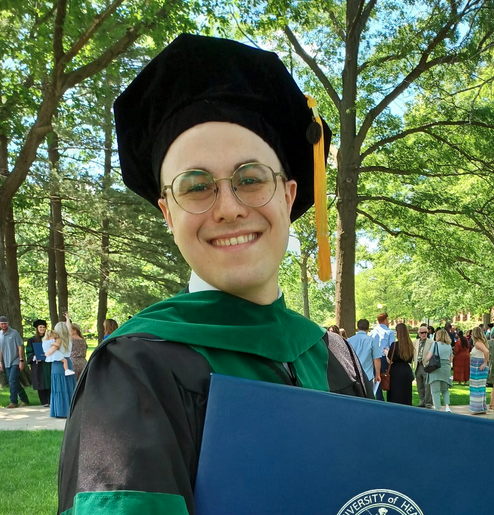
My medical school graduation – the happiest day of my life prior to seeing my chest post-op for the first time.

How to Pay for Gynecomastia Surgery if You’re Broke

When I first started my blog, I was at a low point in my life. I was struggling hard financially after moving out on my own. This was worsened when I found out that I could get surgery to fix the gynecomastia that I’ve had since childhood. Despite fixing a problem that has caused me years of anguish, the surgery wasn’t covered by insurance. After my first consultation with a surgeon, I was quoted $7275 for surgery and anesthesia. After leaving the clinic, I sat in my car and cried for nearly 30 minutes.

Later that day, I called my best friend for comfort. Even though I was ready to give up, he encouraged me to try to raise the money. Several of my other friends convinced me to do the same. I decided to listen to him and raise funds on my own. Shortly after this, I got a second opinion from a different plastic surgeon that quoted me $5900 and was rated higher than the surgeon I had seen previously. The second evaluation took place in early October and I had raised all the necessary funds by the end of December.

Here’s everything I did to raise $6000 in 2 months:

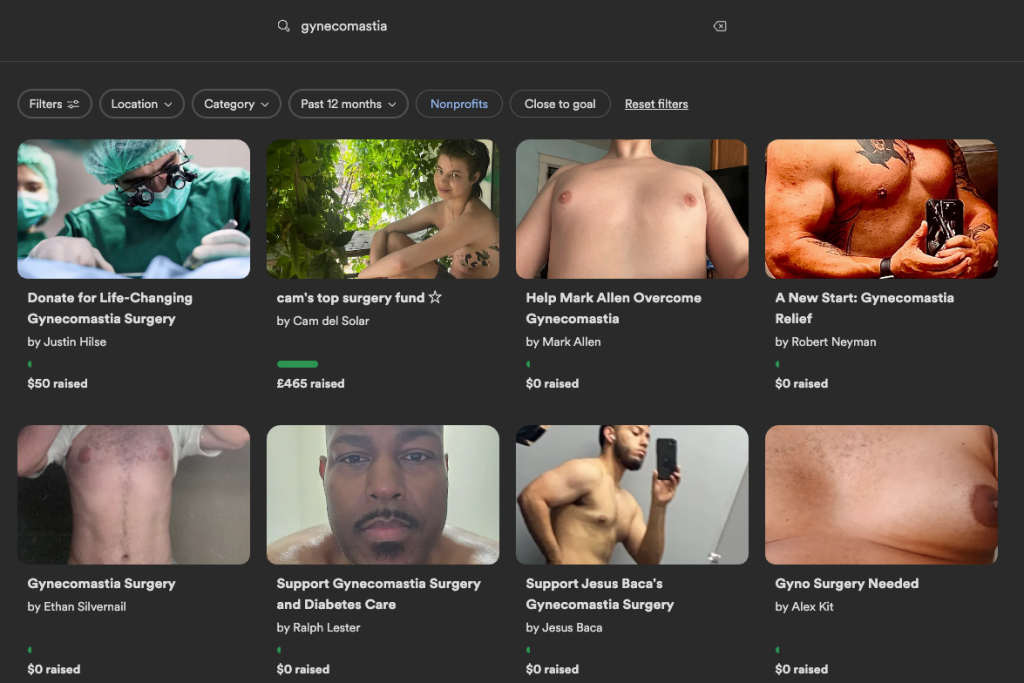
1. Used a Digital Fundraising Platform (GoFundMe)

I chose GoFundMe to collect donations. Before starting, I opened a new bank account for the funds. This kept my money separate from my regular finances. I could make payments for the surgery directly from this account.

There are many platforms for raising funds. GoFundMe, Donorbox, and Fundly are popular. You can also accept cash, checks, or e-transfers. But GoFundMe was easy for my friends to recognize and use.

If you want to know more about GoFundMe campaigns, I’d be happy to write about it!

2. Used Subtle Advertising Tricks While in Casual Conversation

Advertising your fundraiser is key to reaching your goal. I mentioned my campaign in casual conversations. This led to donations and questions about gyno.

Sharing on social media helps too. But talking about it in person can lead to more donations. A friend in Australia became a big donor after I mentioned my GoFundMe to him. He became a recurring donator and happily helped with paying for a significant amount of the surgery. All this without asking him a thing or even attempting to advertise to him.

3. Paid for the Surgery in Pieces

One of the benefits of gynecomastia surgery being elective is that you can pay off your balance in multiple payments. This is key because surgeons often require a 50% down payment before scheduling. To make installation payments, you can choose between either credit-based plans or paying as you go.

Using credit plans like CareCredit is simpler, but it might not work for everyone. If you’re like me and have limited credit, paying as you go is better. As I mentioned earlier, I kept my GoFundMe money in a separate bank account and made payments every time I got deposit notification. This worked out to be roughly $1000 every few weeks. This method avoids interest and doesn’t require approval, which I think makes it an overall superior option as long as you’re willing to keep track of your payments and watch your income vigilantly.

4. Took Advantage of Unforeseen Incidents

Life can be unpredictable and sometimes funny. A month after starting my GoFundMe, I was in a car accident. Luckily, I was okay, but my car was totaled.

This accident turned out to be a blessing in disguise. I got a check for enough to cover my car and had $6000 left. I had already paid $4500 towards my surgery and needed $1500 more.

Instead of buying a new car, I bought a used Honda Civic for $4000. It was perfect for my needs, and I had $2000 left for my surgery. This way, I could afford both a car and my surgery without having to compromise on my needs.

5. Stayed Positive

Believing in myself was crucial in raising the money. If I didn’t have faith, I wouldn’t have shared my story. People care about you and want to help. Stay positive and you’ll find a way to make it work.